Tapped: The Hidden Data Economy Inside Every Push Notification You Receive
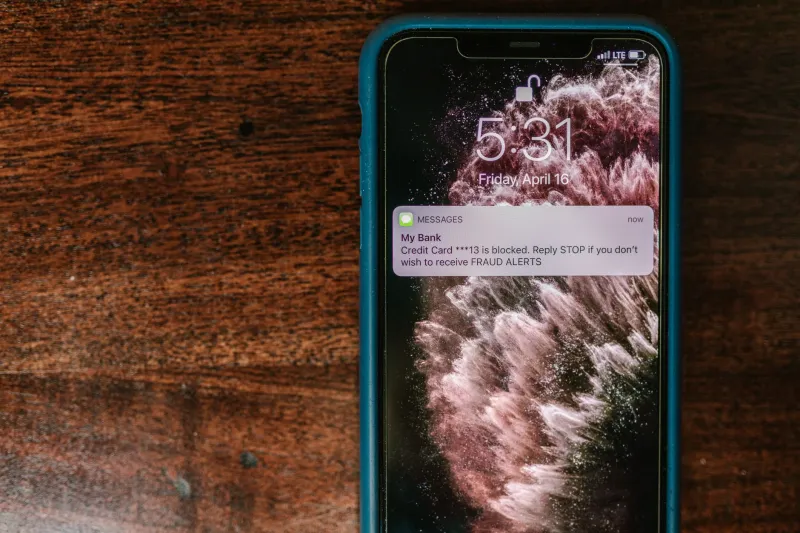
Your phone buzzes. You glance at the screen, swipe the alert away, and return to whatever you were doing. The whole interaction lasts less than three seconds. But somewhere in a data center, that three-second window has just generated a surprisingly detailed behavioral record — one that app developers, advertisers, and data brokers are actively paying to access.
Push notifications are widely understood as a communication tool. What they are less understood as is a behavioral measurement instrument. The distinction matters, and the gap between those two definitions is where significant personal data quietly disappears.
What You Actually Authorize at the Permission Prompt
When an application requests permission to send you notifications on an iOS or Android device, the prompt is deliberately minimal. It asks whether you want to receive alerts, badges, and sounds. It does not describe — because it is not required to — the full scope of what that permission enables the app to observe.
Granting notification access gives an application the ability to deliver content to your device at times of its choosing. But the interaction that follows — whether you tap the notification immediately, ignore it for two hours, dismiss it without opening the app, or never engage with it at all — generates what researchers call response telemetry. This data is routinely transmitted back to the application's servers and, in many cases, shared with third-party analytics and advertising platforms embedded within the app.
The specific data points collected can include the precise timestamp of delivery, the timestamp of any user interaction, the nature of that interaction (open, dismiss, swipe), the device's activity state at delivery time, and in some implementations, geographic context. Individually, these signals appear mundane. Aggregated across weeks and thousands of notification events, they construct a behavioral profile of considerable resolution.
The Psychology Behind the Timing
Notification timing is not arbitrary. The scheduling of alerts is increasingly governed by machine-learning systems trained to identify the moments when individual users are most likely to engage — and most likely to do so in ways that generate commercially valuable actions.
This practice, sometimes described in industry documentation as optimal delivery windows, draws on prior engagement patterns to predict receptivity. If your historical data shows that you tend to open shopping app notifications between 7:00 and 7:30 in the morning, the system learns to prioritize that window for promotional alerts. The goal is not simply to inform you; it is to catch you at a moment of lowered resistance and higher likelihood of conversion.
The psychological mechanics at work here are well-documented in behavioral economics literature. Notifications exploit what researchers describe as the variable reward principle — the same cognitive mechanism that makes slot machines compelling. Because users cannot predict when a notification will carry something meaningful versus something trivial, they develop a reflexive attentiveness to every alert. App developers understand this dynamic and design notification cadences accordingly.
Frequency itself is a data-collection lever. Apps that send high volumes of notifications are not necessarily doing so because they have proportionally more to communicate. Frequent alerts generate more behavioral data points, more opportunities to refine engagement models, and more chances to identify the specific conditions under which a given user is susceptible to acting.
The Third-Party Problem
What many users do not realize is that the app displaying the notification is often not the only entity receiving data about their response to it. The majority of consumer applications — particularly free ones — integrate analytics software development kits (SDKs) from companies such as Amplitude, Braze, Mixpanel, and others. These SDKs are embedded directly in the app's code and operate largely invisibly to the end user.
When a notification event occurs and you respond to it, data about that interaction is frequently routed not only to the app developer but to whichever third-party analytics platforms are integrated into the application. The privacy policies of those third parties — which you nominally agreed to by accepting the app's own terms — may permit further sharing with advertising networks and data aggregators.
This creates a disclosure chain that extends far beyond the company whose icon sits on your home screen. A fitness app, a retail app, and a news app may each send your notification behavior to the same underlying data broker, where your responses are combined into a unified behavioral profile that none of the individual apps could construct on their own.
Federal and State Oversight: A Fragmented Landscape
United States law does not currently impose a comprehensive federal framework governing the collection or use of notification-derived behavioral data. The Federal Trade Commission has authority to pursue enforcement actions against deceptive or unfair data practices under Section 5 of the FTC Act, and has done so in cases involving egregious disclosure failures. But the routine collection of engagement telemetry through notification systems generally falls outside the scope of current regulatory action.
State-level protections offer somewhat more traction. California's Consumer Privacy Act (CCPA) and its successor, the California Privacy Rights Act (CPRA), grant California residents the right to know what personal information is collected about them, to request deletion, and to opt out of the sale or sharing of that data. Several other states — including Virginia, Colorado, Connecticut, and Texas — have enacted similar frameworks. Residents of those states have meaningful, if imperfect, tools for limiting downstream data sharing.
For the majority of Americans in states without comprehensive privacy legislation, the primary defense remains informed consent exercised at the device level.
Practical Steps to Limit Notification-Based Surveillance
Reclaiming meaningful control does not require abandoning smartphone use. It requires deliberate configuration.
Audit your notification permissions regularly. On iOS, navigate to Settings > Notifications to review which applications have permission to send alerts. On Android, the equivalent path is Settings > Apps > [App Name] > Notifications. Revoke permissions for any application where the notification value does not clearly justify the access.
Prefer time-sensitive or scheduled delivery modes. iOS offers a notification delivery setting called Scheduled Summary, which batches non-urgent alerts and delivers them at user-defined times rather than in real time. This disrupts the granular timestamp data that behavioral analytics systems rely on.
Disable lock-screen notification previews. Showing notification content on a locked screen is a separate permission from receiving notifications at all. Disabling previews reduces the contextual data available to apps about when and where you encounter their alerts.
Review app privacy labels before installation. Apple's App Store requires developers to disclose data collection practices through standardized privacy nutrition labels. Google Play has implemented similar requirements. Checking these labels before granting any permissions — notification or otherwise — provides advance warning of apps with aggressive data collection postures.
Treat notification permission requests as the significant access grants they are. The cultural normalization of tapping Allow reflexively is itself a product of deliberate UX design. Slowing down at the permission prompt and asking whether a given app genuinely requires alert access is a small behavioral change with a disproportionate privacy benefit.
Attention as Infrastructure
The push notification ecosystem represents a convergence of behavioral psychology, advertising technology, and data infrastructure that has developed largely outside of public scrutiny. The three-second interaction between a user and an alert is not incidental to that system — it is the system's primary unit of value.
Understanding that your attention, and specifically the patterns of your attentiveness, constitutes a commercially traded commodity is the prerequisite for exercising any meaningful agency over it. The permission prompt on your screen is not asking whether you want to be kept informed. It is asking whether you consent to participate in a continuous behavioral study. The choice of how to answer that question is, at least for now, still yours.