The Open Door Nobody Meant to Leave Unlocked: A Weekend Plan for Securing Your Home Network
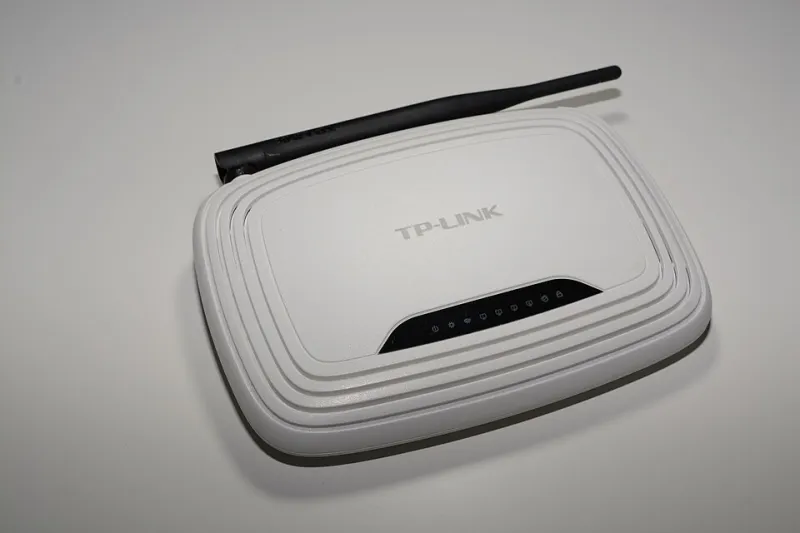
Photo: Hayden Schiff, CC BY 4.0, via Wikimedia Commons
The break-in, when investigators eventually reconstructed it, did not look like a break-in at all. There was no forced entry, no alarm, no shattered glass. There was a router in a suburban living room, still using the default password printed on its label, and a smart doorbell that had not received a firmware update since it was installed. From those two small oversights, an attacker assembled something far more valuable than access to a camera: access to a life.
This scenario is a composite — but every element in it mirrors patterns documented in federal advisories, FTC complaints, and breach forensics reports. Home networks fail not through exotic exploits but through ordinary neglect. And the failure, left unattended, tends to cascade.
How a Small Opening Becomes a Large Problem
Consider how the hypothetical unfolded.
Week one: the foothold. An automated scanner — the internet is continuously swept by such tools, a phenomenon researchers call the Internet of Things search problem — finds the router's administration page exposed and its credentials unchanged from the factory. Logging in takes seconds. From there, the attacker can alter DNS settings, silently redirecting the household's web traffic through servers they control.
Week three: the harvest. With DNS under their control, the attacker does not need to break into anyone's bank. They simply wait for the residents to log in themselves, then route them to convincing replicas of the login pages. Credentials, session cookies, and answers to security questions flow in passively. Nothing looks wrong. The padlock icon in the browser, notably, may still be present.
Week six: the cascade. Password reuse — still the single most common self-inflicted wound in American account security, per repeated NIST guidance — converts one stolen password into a dozen compromised accounts. Email first, because email is the master key: whoever controls it can reset everything else. Banking follows. Then the longer-tail damage: fraudulent accounts opened in the residents' names, discovered only when a credit application is denied months later.
A second scenario plays out even faster. An unsecured IP camera — a baby monitor or porch cam bought on impulse — broadcasts its feed to anyone who finds it. In the worst documented cases, such feeds have been used for harassment and extortion. In the most common cases, they are simply collected, cataloged, and traded. Either way, the household's privacy has been exported without its knowledge.
Why This Keeps Happening
The economics favor the attacker. Default credentials, unpatched firmware, and flat home networks — where every device, from a laptop to a lightbulb, shares the same trust zone — are the norm, not the exception. Internet service providers ship millions of routers configured for convenience rather than security. Consumers, reasonably, assume that a device sold at retail is safe at its defaults. Increasingly, that assumption is wrong.
The One-Weekend Lockdown
The good news is that closing these doors takes less effort than assembling the average bookshelf. Here is the checklist, organized as a weekend project.
Saturday morning — the router.
- Log in to the router's admin panel and change the administrator password to something long and unique. This is the single highest-value fix on the list.
- Update the firmware, or enable automatic updates if the device supports them. If the router is more than five or six years old and no longer receives updates, replacing it is a security purchase, not a luxury.
- Disable remote administration unless you genuinely use it. There is no reason a home router's settings should be reachable from outside the house.
- Turn off WPS, the push-button pairing feature that has long been a known weak point.
Saturday afternoon — the Wi-Fi and the devices.
- Confirm the Wi-Fi network uses WPA3 encryption, or WPA2 at minimum with a strong passphrase — not the old WEP, and not an open network.
- Set up a separate guest network for smart TVs, cameras, speakers, and other IoT devices. If one of them is compromised, the attacker should not be standing in the same room as your laptop.
- Change every default device password. Baby monitors and cameras are the priority.
- Audit what is actually connected. Every unknown device is a question worth answering.
Sunday — the habits that make it stick.
- Adopt a password manager and eliminate reuse, starting with your email account. Password Security professionals agree: the email credential is the keystone; protect it above all.
- Turn on multi-factor authentication for email, banking, and any account that can reset other accounts. An authentication app is preferable to SMS where available.
- Enable automatic updates on phones, computers, and — where supported — IoT devices.
- Place a calendar reminder to repeat this review twice a year. Security is not a weekend; it is a maintenance schedule that a weekend can initialize.
Closing the Door
The uncomfortable truth of home network security is that attackers rarely pick locks. They walk through doors that were never closed. The suburban scenario at the top of this article required no sophistication — only patience and an unlocked admin panel.
The residents in that story could not have prevented every possible attack. But a changed router password, a segmented guest network, and a unique email passphrase would have broken the chain at its first link. Five years of identity-repair paperwork, credit freezes, and fraud affidavits avoided for roughly four hours of weekend labor.
That is among the best returns available in personal cybersecurity. The door is already there. This weekend, lock it.