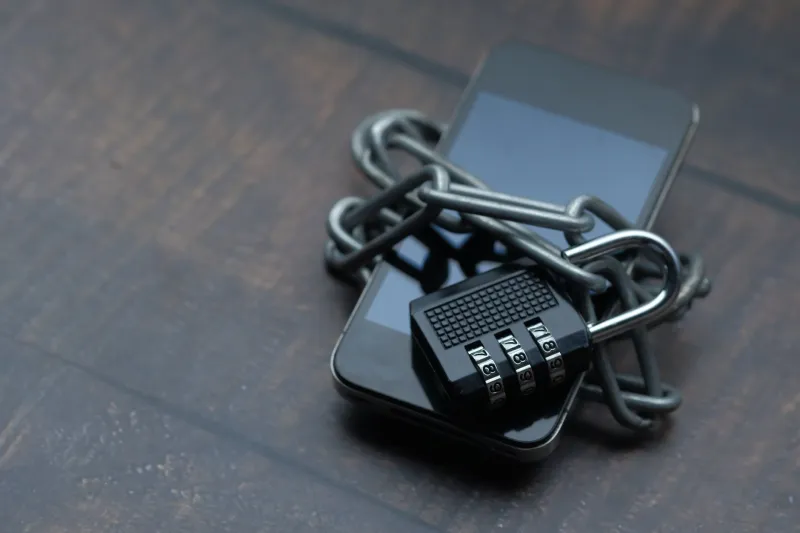
Encrypted in Name Only: What Messaging Apps and Cloud Platforms Don't Tell You About What They Can See
When a messaging app displays a padlock icon and the phrase "end-to-end encrypted," most users reasonably conclude that their communications are private. The implication is intuitive: only the sender and the recipient can read what was written. For the actual text of a message traveling between two phones, that conclusion is largely correct. But the architecture surrounding that message — the envelope, the postmark, the routing slip, and the delivery log — frequently tells a story that no padlock is protecting.
This is the decryption illusion: the widespread belief that because message content is encrypted, the act of communicating is itself private. In practice, the two are entirely separate concerns, and the platforms offering encryption often have expansive visibility into everything except the words themselves.
What End-to-End Encryption Actually Does
To understand the gap, it helps to be precise about what end-to-end encryption (E2EE) accomplishes. In a properly implemented E2EE system, messages are encrypted on the sender's device using a cryptographic key that only the recipient holds. The platform transmitting the message — Signal, WhatsApp, Apple iMessage, or any other — receives a ciphertext it mathematically cannot decode. In that narrow sense, the content is genuinely private from the platform.
The operative word is content. Encryption protects the payload. It says nothing about the metadata generated by the act of sending that payload.
Metadata, in this context, includes information such as: which accounts communicated with each other, the timestamps of those communications, the frequency and duration of exchanges, the device identifiers involved, IP addresses at the time of transmission, approximate geographic location, and whether messages included attachments. None of this requires decrypting a single character of message text. It is produced automatically by the infrastructure that makes communication possible.
The Metadata Portrait
A useful analogy, often cited by privacy researchers and former intelligence officials alike, is the telephone billing record. A phone company does not need to record the content of a call to know that you called a particular number seventeen times in one week, that calls lasted an average of forty minutes, and that they occurred between 10 p.m. and midnight. That pattern, absent a single word of conversation, can reveal a relationship, a negotiation, or a crisis.
Digital metadata is far richer. In 2013, researchers at Stanford University conducted a study demonstrating that call metadata alone could reliably infer whether participants had been diagnosed with a serious medical condition, were involved in a legal dispute, or held particular religious affiliations. No content was required.
For messaging platforms, the data picture is more granular still. WhatsApp, which is owned by Meta and uses the Signal Protocol for message encryption, has disclosed in its privacy policy that it collects information including usage and log data, device information, location data when permitted, and information about how users interact with businesses on the platform. The messages are encrypted. The behavioral and relational profile built around those messages is not.
Backup as a Backdoor
One of the most consequential — and least-discussed — vulnerabilities in consumer encryption involves cloud backup. Many encrypted messaging applications offer users the option to back up their message history to Apple iCloud or Google Drive. Until a policy change in 2021, WhatsApp's cloud backups were not encrypted by default, meaning that messages stored in iCloud or Google Drive existed as plaintext, accessible to Apple, Google, and by extension, any law enforcement agency presenting a valid legal process.
Apple's iCloud backup system presents a similar structural tension. iMessage uses E2EE for messages in transit between Apple devices. However, if a user enables iCloud Backup — a default setting for most consumer accounts — a copy of the encryption keys used to protect iMessage conversations is uploaded to Apple's servers alongside the messages themselves. Apple can, and does, provide this data to law enforcement upon receipt of a lawful request. The encryption that protected the message in transit becomes irrelevant once the key lives in a third-party cloud.
This is not a theoretical vulnerability. Court records and law enforcement affidavits in federal cases have repeatedly cited iCloud backup data as a source of message content from devices whose owners believed their communications were encrypted.
The Legal Perimeter Around Encrypted Content
Federal law in the United States provides companies with legal mechanisms to compel platform providers to disclose user data. Under the Electronic Communications Privacy Act and related statutes, prosecutors can obtain metadata through subpoena — a lower legal threshold than the probable cause warrant required for content. This distinction is legally significant: the government can learn that you communicated with a particular person far more easily than it can learn what you said.
In practice, metadata is often sufficient. In several high-profile federal prosecutions, investigators built substantial cases using communication metadata, location history, and account activity logs obtained from platforms — without ever decrypting a single message. The encrypted content became largely irrelevant once the behavioral pattern was established.
For criminal actors who believe that encryption renders them invisible, this architecture has proven repeatedly fatal to their operational security. For ordinary users, the concern is less about prosecution and more about the breadth of what platforms can observe, retain, and potentially share.
Email: A Special Case
Email presents an even more complex picture. Services such as ProtonMail and Tutanota market themselves explicitly as end-to-end encrypted email providers, and for messages exchanged between users of the same platform, that claim holds. But email is a federated protocol: the moment a ProtonMail user sends a message to a Gmail address, the message must be decrypted at the ProtonMail server and delivered in a format the recipient's service can process. The encryption protects the message only to the edge of the encrypted network.
Furthermore, in 2021, ProtonMail disclosed that it had complied with a Swiss court order requiring it to log the IP address of a specific user and provide that data to authorities. The company had no choice under Swiss law, and the message content remained encrypted. But the metadata — specifically, the IP address that could identify a user's physical location — was not protected by any encryption the platform offered.
What Genuine Privacy Requires
The lesson for users is not that encryption is worthless. It remains a meaningful protection against passive interception — the kind of bulk surveillance that captures data in transit at the network level. What it does not provide is comprehensive privacy from the platforms that deliver it.
For users with elevated privacy needs, security researchers consistently recommend several practices: using applications such as Signal, which minimizes metadata retention by design and is transparent about what it does and does not collect; disabling cloud backup for sensitive communications or ensuring that backups are independently encrypted with keys the user controls; using a VPN or Tor to obscure IP address metadata from service providers; and treating any platform's privacy claims as a starting point for scrutiny rather than a conclusion.
Perhaps most importantly, users should read privacy policies with the specific question: What does this company retain about how I communicate, even if it cannot read what I communicate? The answer is rarely as reassuring as the padlock icon suggests.
Encryption is a tool, not a posture. It secures a specific layer of communication — and only that layer. The infrastructure built around it, the companies operating it, and the legal regimes governing it all exist outside the cryptographic boundary. Understanding where the protection ends is the first step toward making informed decisions about where to place your trust.