Engineered Urgency: The Psychological Machinery Behind Push Notifications That Override Your Judgment
At first glance, a push notification appears to be a courtesy — a small digital tap on the shoulder informing you that something requires attention. In practice, many of the notifications that arrive on American smartphones each day are something considerably less benign: carefully constructed psychological instruments designed to destabilize calm deliberation and replace it with reactive, impulsive behavior. The stakes are not trivial. What a user does in the three seconds following a notification can determine whether an app gains access to location data, a subscription renews without scrutiny, or sensitive account credentials are entered into a convincing phishing interface.
The discipline that governs this manipulation has a name in the technology industry: persuasive design. Its practitioners operate at the intersection of behavioral psychology, user-experience engineering, and data science. The results of their work appear on your lock screen dozens of times each day.
The Anatomy of a Manipulative Alert
Three psychological mechanisms appear with particular frequency in notification design intended to override user judgment.
Artificial scarcity creates the impression that an opportunity is expiring. Phrases such as "Only 2 hours left," "Your reward expires tonight," or "Last chance to claim your offer" are not neutral informational statements — they are deliberate invocations of loss aversion, a cognitive bias documented extensively in behavioral economics research. When a user believes something is about to disappear, the rational calculus of whether that thing is worth having tends to collapse under time pressure.
Social proof exploits the human tendency to infer correct behavior from the actions of others. Notifications reading "Your friend just unlocked a new achievement" or "14 people in your area are viewing this listing" manufacture a sense of social momentum. The implied message is that participation is the norm and abstention is the anomaly. In permission-request contexts, this framing is particularly effective: users who believe their peers have already consented to data sharing are measurably more likely to do the same.
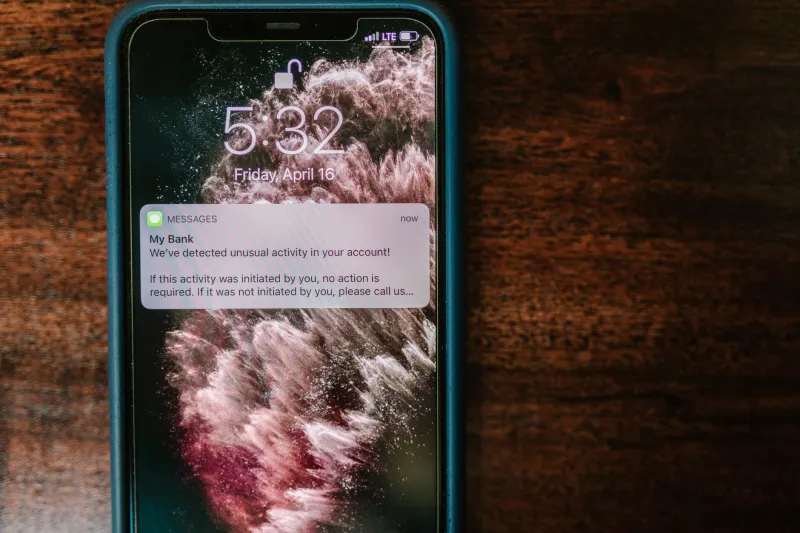
Fabricated urgency differs subtly from scarcity in that it attaches emotional weight to actions that carry no genuine time constraint. A banking app that sends a notification reading "Action required on your account" when the underlying issue is a routine marketing prompt is not informing the user — it is alarming them into engagement. The physiological stress response triggered by perceived account threats is a reliable mechanism for bypassing the deliberative processes that would otherwise prompt a user to read carefully before tapping.
Dark Patterns at the Interface Level
The notification itself is only the entry point. Once a user has been drawn into an app through a manipulative alert, a second layer of design manipulation frequently awaits. User-experience researchers refer to these as dark patterns — interface designs that guide users toward outcomes that benefit the developer rather than the user.
Permission dialogs are a common site of dark-pattern deployment. When an app requests access to contacts, location, or the microphone, the dialog box that appears is rarely neutral. Buttons are sized and colored asymmetrically, with the permission-granting option rendered in a prominent, visually affirming color while the denial option appears in gray, smaller type, or is labeled with language that implies consequence — "Not now" rather than "No," for instance, subtly communicating that refusal is temporary rather than final.
In subscription and purchase flows, the pattern compounds. A notification engineered to create urgency delivers the user to a checkout screen where the confirmation button is large, brightly colored, and positioned at the natural resting point of the thumb, while the cancellation path requires additional navigation steps. The friction is not accidental — it is calculated.
The Data Dimension
Beyond purchases and permissions, notification manipulation serves a data-collection function that receives less public attention. Engagement metrics — which notifications a user opened, how quickly they responded, what action they took, and how long they remained in the app afterward — constitute a behavioral profile of significant commercial value. Advertising networks pay premiums for audiences whose response patterns to urgency and social-proof triggers have been mapped with precision. Each tap on a manipulative notification is, in effect, a data point being sold.
For users who have enabled broad notification permissions across dozens of apps, the aggregate behavioral profile assembled through this mechanism can be granular enough to infer mental state, financial anxiety, relationship status, and health concerns — categories of information that the same users would almost certainly decline to share if asked directly.
Federal and State Regulatory Context
The United States currently lacks a comprehensive federal privacy statute that directly addresses notification dark patterns, though the Federal Trade Commission has taken enforcement action against deceptive interface design under its existing unfair-and-deceptive-practices authority. Several states have moved further: the California Consumer Privacy Act and its successor, the California Privacy Rights Act, impose requirements on businesses regarding the clarity of consent mechanisms, and regulators have begun applying those standards to in-app permission flows.
The Children's Online Privacy Protection Act imposes stricter requirements on apps directed at users under thirteen, but enforcement has been inconsistent, and the notification manipulation documented in adult-facing applications frequently appears in platforms used by adolescents.
In 2023 and 2024, the FTC signaled increased interest in what it termed "commercial surveillance" practices, which include the behavioral profiling enabled by notification engagement data. Whether that interest translates into durable regulatory constraints remains an open question.
Practical Strategies for Reclaiming Control
The asymmetry of expertise between app developers and ordinary users is real, but it is not insurmountable. The following measures materially reduce exposure to notification-based manipulation.
Conduct a notification audit. Both iOS and Android provide centralized notification management interfaces. Users who have never reviewed these settings frequently discover that dozens of applications have been granted notification permissions without any conscious decision. Revoking permissions for apps that do not serve a genuine real-time communication function — social platforms, retail applications, games — eliminates the primary delivery vector for manipulative alerts.
Enable scheduled notification summaries. iOS's Notification Summary feature and Android's comparable notification batching options allow users to receive non-urgent alerts in consolidated form at predetermined times rather than as immediate interruptions. Batched notifications are processed by the deliberative mind rather than the reactive one, substantially reducing the effectiveness of urgency triggers.
Treat urgency language as a red flag. Any notification employing time-pressure language, countdown framing, or implied account threat should be treated as a signal to slow down rather than speed up. Legitimate account security alerts from financial institutions and identity services do not typically require immediate in-app action via a notification link — they direct users to log in through verified channels independently.
Review permission dialogs outside the notification context. When an app requests a new permission following a notification-driven engagement session, the behavioral priming from that session is still active. Dismissing the dialog and reviewing the request later — in a neutral context, through the device's settings menu — produces more deliberate decisions.
Use Focus modes strategically. Both major mobile operating systems allow users to define which applications can deliver notifications during specified time periods or activities. Configuring these modes to restrict commercial applications during morning and evening hours, when decision fatigue is highest, reduces the effectiveness of timing-optimized notification delivery.
The Broader Implication
Push notifications began as a genuinely useful technology — a mechanism for ensuring that time-sensitive information reached users without requiring them to actively check applications. The manipulation of that mechanism into a behavioral engineering tool represents a characteristic arc in the history of digital design: a feature introduced to serve users, gradually repurposed to extract value from them.
Recognizing that arc is not cynicism. It is the foundational literacy that CipherWatch exists to support. The notification on your lock screen is not always what it appears to be. Knowing that changes what it can do to you.