Recurring Revenue, Recurring Surveillance: The Hidden Data Economy Inside Your Subscriptions
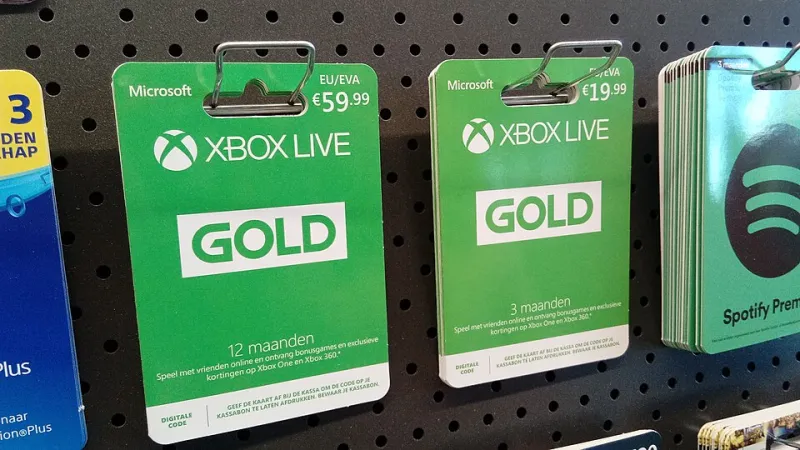
Photo: Donald Trung Quoc Don (Chữ Hán: 徵國單) - Wikimedia Commons.(Want to use this image?), CC BY-SA 4.0, via Wikimedia Commons
When you enter a credit card number to start a free trial, you are doing more than authorizing a future charge. You are opening a data relationship that may outlast the subscription itself, survive multiple ownership changes, and feed advertising and analytics pipelines you never agreed to join. The subscription economy—now valued at hundreds of billions of dollars annually in the United States—has quietly become one of the most durable mechanisms for continuous consumer surveillance in the digital marketplace.
The Billing Cycle as a Data Harvest
Every renewal event is a data touchpoint. When a subscription platform processes your monthly charge, it confirms that your card is still active, that your address on file is current, and that you remain an engaged customer. That confirmation has value far beyond the transaction itself. Payment processors, merchant banks, and third-party analytics vendors each receive fragments of that interaction, and in aggregate those fragments construct a detailed behavioral profile.
Researchers at the Electronic Frontier Foundation and academic privacy labs have documented how subscription platforms share renewal data with advertising partners through server-to-server integrations that operate entirely outside the browser—meaning ad blockers and privacy-focused browsers offer no protection. Every successful charge can silently trigger an event ping to Facebook's Conversions API, Google's Enhanced Conversions, or a dozen lesser-known data brokers embedded in the platform's back end.
Payment data, in particular, occupies a privileged position in this ecosystem. A tokenized card number linked to a real name and billing address is a persistent identifier that does not expire the way a browser cookie does. When data brokers acquire transaction records—through partnerships with financial institutions or payment aggregators—they can match your subscription history across dozens of unrelated services and build a spending-behavior dossier that advertising platforms find extraordinarily valuable.
Dark Patterns and the Cancellation Trap
The subscription industry has developed a sophisticated vocabulary of friction. The Federal Trade Commission has in recent years taken enforcement action against companies employing so-called "negative option" marketing—arrangements in which a consumer's silence or inaction is treated as consent to continued billing. But the data implications of these practices extend well beyond the financial harm.
When a service routes you through a multi-step cancellation flow—asking you to call a phone number, chat with a retention agent, or navigate a buried account-settings page—each interaction generates additional data. Retention agents log your stated reasons for leaving. Chatbot transcripts are analyzed for churn signals. The email address you used to initiate cancellation may be shared with win-back advertising campaigns operated through third-party platforms.
Perhaps most consequentially, many services do not delete your account data upon cancellation. Their privacy policies, often written in deliberately opaque language, permit indefinite retention of purchase history, device identifiers, browsing behavior within the platform, and payment metadata. That data remains available for internal analytics, potential sale in the event of a corporate acquisition, or disclosure in response to civil litigation—none of which require your notification.
Linked Accounts and the Cross-Platform Exposure Problem
The convenience of signing into a new subscription service using an existing Google, Apple, or Facebook account has a hidden cost. OAuth-based single sign-on arrangements create a documented link between your identity on the identity provider's platform and your activity on the subscribing service. Depending on the permissions granted at sign-in, the subscription platform may receive your email address, profile photo, contact list, or—in older or more permissive implementations—access to your social graph.
More troubling is what happens when the subscription service is acquired or goes bankrupt. User data, including linked-account associations, is typically treated as a business asset subject to transfer. The buyer may operate under a materially different privacy policy, and while the FTC has in some cases challenged post-acquisition privacy policy changes, enforcement has been inconsistent.
Connecting multiple subscriptions to the same payment method also creates a correlation risk. If any one of those services suffers a data breach, the exposed payment token—even if not directly usable for fraud—can be cross-referenced against other breach databases to de-anonymize your activity across the subscription ecosystem.
Practical Steps to Audit and Contain Your Exposure
Addressing subscription-based data leakage requires both a financial audit and a deliberate approach to account hygiene.
Inventory your active subscriptions. Review your bank and credit card statements for the past twelve months, flagging every recurring charge. Services such as Privacy.com allow US consumers to generate virtual card numbers tied to spending limits, which can be assigned one-per-subscription. This approach not only caps financial exposure but also breaks the cross-service payment correlation that data brokers exploit.
Use unique email addresses per service. Tools such as Apple's Hide My Email feature or third-party alias services like SimpleLogin allow you to create a distinct email address for each subscription. If one service sells or leaks your address, the resulting spam is traceable to a single source and can be disabled without affecting your primary inbox.
Read the data-retention clause before canceling. Before initiating cancellation, locate the service's privacy policy and identify what data is retained post-termination and for how long. Submit a formal deletion request under applicable state law—California's CCPA, Virginia's CDPA, and Colorado's CPA all grant residents the right to request deletion of personal data—immediately after canceling. Document the request and the response.
Audit OAuth connections regularly. Visit the security settings of your Google, Apple, and Facebook accounts periodically to review which third-party applications have been granted access. Revoke permissions for any service you no longer actively use.
Prefer guest checkout where available. Creating a full account is rarely required to initiate a subscription. Guest or minimal-registration options reduce the volume of profile data collected and limit the service's ability to link your subscription history to a persistent identity.
The subscription economy offers genuine convenience, and not every company operating within it is acting in bad faith. But the structural incentives of a recurring-revenue model—combined with the commercial value of behavioral data—mean that the default configuration of most subscription services is oriented toward maximum data collection. Treating each new subscription as a data-sharing agreement, rather than merely a billing arrangement, is the most effective reframe available to privacy-conscious consumers.