Trained on You: What Generative AI Systems Know About You—and How They Learned It
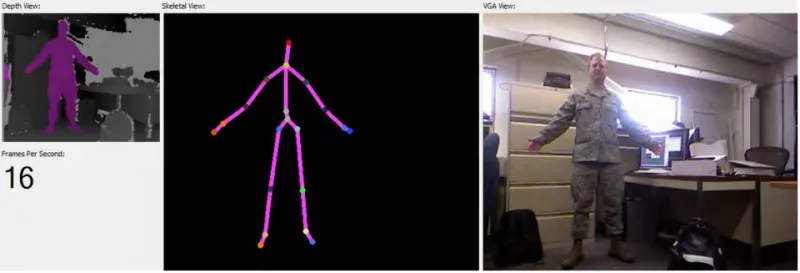
Photo: Captain Andrew M. Freeman, Air Force Institute of Technology / Air Force Research Laboratories (AFRL), Sensors, ATR, Target Recognition Branch., Public domain, via Wikimedia Commons
Somewhere inside the weights of a large language model, a statistical echo of your digital life may already exist. That is not a hypothetical. The datasets used to train the most widely deployed generative AI systems—GPT-4, Llama, Gemini, and their predecessors—were assembled from web crawls spanning billions of pages, including forum posts, social media archives, news comment sections, personal blogs, leaked credential databases, and public records repositories. If you have maintained any meaningful online presence over the past two decades, the probability that some version of your words, your name, or your personal details contributed to at least one major AI training corpus is not negligible.
Understanding what that actually means—and what it does not mean—requires separating well-documented fact from speculation, and distinguishing between AI data collection and the more familiar forms of commercial surveillance that privacy-conscious Americans have spent years learning to navigate.
How Training Data Is Assembled
Large language models are trained on text. Lots of it. The Common Crawl archive, a nonprofit that has been continuously scraping the public web since 2008, has become one of the foundational data sources for AI training. Its archive now spans petabytes of content and is freely available for download. Researchers and commercial AI developers alike have used it as a base dataset, typically applying filters to remove low-quality content—but those filters are imperfect and inconsistently applied.
Beyond Common Crawl, training datasets have incorporated digitized books (the Books3 dataset, which was the subject of significant copyright litigation, included titles from major publishers), Wikipedia, GitHub repositories, academic paper archives, Reddit, and—in some documented cases—data that appears to have originated from credential-stuffing compilations and paste-site dumps containing breach data. A 2023 study published by researchers at Google DeepMind and several US universities identified personal email addresses, phone numbers, and Social Security numbers within outputs generated by a prominent language model, suggesting those data points had been memorized from training material.
This is a critical distinction from conventional marketing data collection. When a retailer collects your purchase history, that information is stored in a database that can, at least in principle, be queried, corrected, or deleted. When your personal information is absorbed into a neural network's training process, it becomes encoded in billions of numerical parameters in a way that is not directly retrievable or individually addressable. The information is not "stored" in any conventional sense—it is distributed across the model's weights—but it can surface in outputs under the right prompting conditions.
The De-Anonymization Risk
Privacy researchers have long understood that anonymization is a weaker protection than it appears. The combination of seemingly innocuous data points—a ZIP code, a birthdate, and a gender—is sufficient to uniquely identify a majority of Americans in most datasets, a finding that has been replicated across decades of academic work. Generative AI introduces a new dimension to this problem.
Because large language models are trained on corpora that include personal narratives, forum discussions, and social media posts, they may have internalized associations between pseudonymous online identities and real-world identifying information. A model that was trained on a dataset including a Reddit post written under a pseudonym, a LinkedIn profile written under a real name, and a news article connecting the two may be capable of surfacing that connection in response to carefully constructed prompts—even if no individual source document in the training data explicitly made the link.
This capability, sometimes called AI-assisted inference de-anonymization, is not yet well-characterized in terms of its real-world prevalence or reliability. But security researchers have demonstrated proof-of-concept attacks in which language models were used to correlate pseudonymous online personas with real identities using only publicly available information. The implications for whistleblowers, domestic abuse survivors, and others who rely on pseudonymity for safety are serious.
Sensitive Data and the Breach Pipeline
Perhaps the most underreported dimension of AI training data is the role of breach-derived information. Credential dumps—files containing email addresses and hashed or plaintext passwords harvested from compromised services—circulate widely on dark web forums and paste sites. Those paste sites are indexed by web crawlers. Some portion of that content has almost certainly been ingested into large-scale web crawl datasets.
The practical consequence is that a language model trained on such data may have internalized associations between email addresses and passwords, between usernames and real names, or between individuals and the services they used—associations that were originally exposed through criminal breaches. While models do not function as searchable databases and cannot reliably reproduce specific breach records on demand, the memorization research cited above suggests that high-frequency or distinctive data points from training corpora can be elicited under certain conditions.
What Legal Protections Currently Exist
US federal law does not currently include a comprehensive data privacy statute governing AI training data. The FTC has signaled that deceptive data practices in AI development may fall within its existing Section 5 authority, and it has issued guidance indicating that companies cannot retroactively change their data use terms to permit AI training on data collected under earlier, more restrictive policies. Several states—California foremost among them—are advancing legislation that would impose new obligations on AI developers regarding training data provenance and individual opt-out rights.
The European Union's AI Act and the GDPR together impose considerably more stringent requirements on AI developers operating in European markets, including obligations to document training data sources and, in some interpretations, to honor individual data subject access and deletion requests even for data incorporated into model weights. Whether those requirements are technically feasible given the distributed nature of model training remains an active legal and technical debate.
Steps Individuals Can Take
Complete removal of personal information from existing AI training datasets is not currently possible for most individuals. However, several measures can limit future exposure and reduce the risk that sensitive information enters new training pipelines.
Reduce your public-facing digital footprint. Content that is not publicly accessible cannot be crawled. Review the privacy settings on social media accounts, consider making older posts private or deleting them, and evaluate whether personal blogs or forum contributions contain information you would prefer not to contribute to future training datasets.
Submit opt-out requests to major AI developers. OpenAI, Google, and Meta have each established mechanisms—varying in scope and reliability—through which individuals can request that their personal information be excluded from training data or from model outputs. These processes are often cumbersome and their effectiveness is not independently verified, but they create a documented record of your objection.
Exercise state privacy rights. California residents can submit deletion requests to data brokers and AI companies under the CCPA. The California Privacy Protection Agency has been developing specific regulations addressing AI and automated decision-making. Residents of Virginia, Colorado, Connecticut, and Texas have comparable rights under their respective state statutes.
Be deliberate about what you submit to AI interfaces. Information you enter into a generative AI chatbot may, depending on the service's terms of use, be used to improve the model. Review the data use terms of any AI tool you use professionally or personally, and disable training-data contribution options where they are available.
Generative AI represents a genuine inflection point in the history of personal data. The scale at which these systems ingest and process human-generated content is without precedent, and the legal and technical frameworks for managing the resulting privacy implications are still being constructed. For now, the most reliable protection remains the same one that has always applied to digital privacy: information you do not share cannot be collected.