Recovery Is the Weakest Link: Why Your Phone Number Became a Master Key
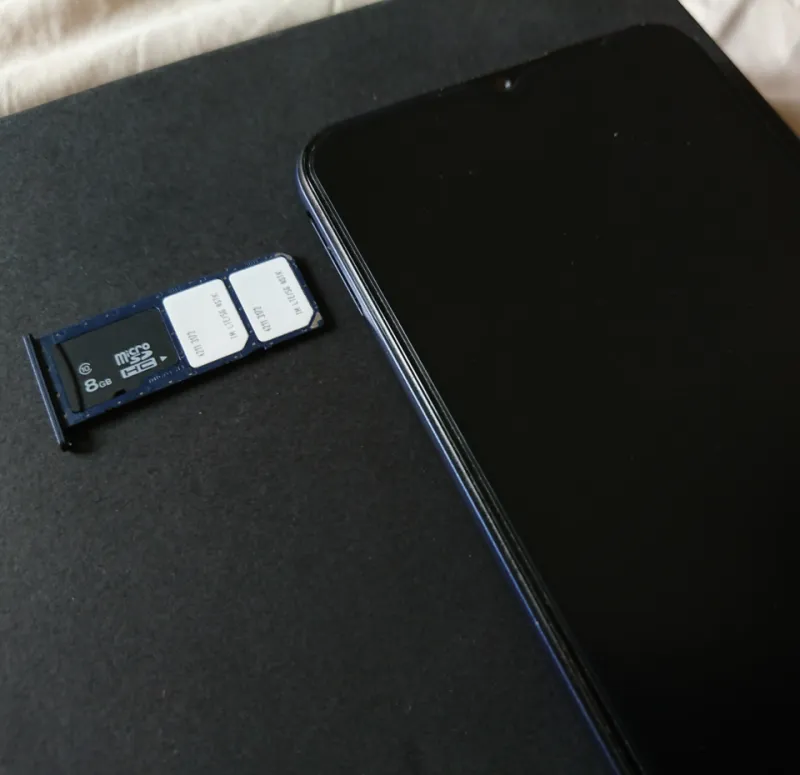
Photo: Paowee, CC BY-SA 4.0, via Wikimedia Commons
Ask a security engineer to name the weakest part of a typical American's online accounts and the answer is rarely the password. It is the thing that resets it.
An assumption nobody audited
The phone number was never designed as an identity credential. It was a billing identifier for a copper network. Over two decades, however, it became the default recovery channel for email, banking, social media, and cloud storage — a single string of digits that, once verified, can unlock nearly everything else. That concentration is the vulnerability.
How a number moves between people
Number portability is a consumer right and a genuinely useful one: it lets you keep your number when you change carriers. It also means a number can be moved onto a new device and a new SIM without your physical participation, provided someone convinces a carrier — or a carrier employee — that the request is legitimate.
Port-out fraud takes a few recognizable shapes. Attackers assemble personal details from breach data and social media, then contact a carrier's retail line or a third-party reseller while impersonating the account holder. In other cases the weak point sits inside the store: an employee persuaded, bribed, or simply rushed during a busy shift. Once the port completes, the victim's phone loses service — frequently the first warning they receive — while the attacker's device begins collecting every one-time code sent to that number.
This article describes the pattern conceptually and deliberately. The mechanics are well documented in court filings and carrier advisories, and granular detail is not what protects people.
The downstream cascade
The damage rarely stops at one account. A typical takeover sequence runs from the phone number to the email address, then from email to everything that trusts email: financial accounts, cloud photo libraries, workplace systems, and the password manager vault itself when recovery is anchored to that inbox.
The second wave is often worse than the first. With control of an inbox, an attacker can reset credentials for accounts the victim forgot existed — a decade-old shopping profile, a dormant brokerage login, a domain registration that quietly renews every year.
Why SMS keeps losing ground
Security standards bodies have discouraged SMS-based two-factor authentication for years, reasoning that the phone network is not a trustworthy authentication channel. That guidance has been widely ignored, largely because SMS works everywhere, requires no app, and costs nothing to support.
The distinction worth holding onto is between SMS as a second factor and SMS as a recovery method. A one-time code delivered by text is weak. A phone number that can silently reset your password is weaker still, because it converts a routine support interaction into a single point of failure.
What regulators asked carriers to fix
In 2023 the Federal Communications Commission adopted rules requiring wireless providers to use more secure methods of authenticating customers before transferring a number, and to notify subscribers when a port-out request is submitted. Carriers have since introduced port-out PINs, number locks, and account-level transfer protections, though the experience varies by provider and sometimes by retail channel.
These measures help. They do not eliminate the problem, because they depend on the same frontline verification that social engineering is built to defeat.
What actually helps now
The durable fix is to reduce the number of accounts that treat a phone number as sufficient proof of identity. In rough order of impact:
- Where a service offers passkeys — cryptographic credentials bound to a device — enroll. They cannot be phished, replayed, or read off a SIM card.
- Move two-factor authentication from SMS to an authenticator app or a hardware security key, and keep printed recovery codes somewhere offline.
- Set a port-out PIN with your carrier and, where offered, enable a number lock requiring in-app or in-person authorization before any transfer.
- Give your primary email account a recovery path that does not depend on your phone number at all.
- Remove the phone number as a recovery option wherever it is optional. It is a convenience most people set once and never revisit.
The recovery-email problem
There is a mirror image of the SIM-swap risk that receives far less attention: recovery addresses configured years ago and no longer monitored. An abandoned recovery inbox is a backdoor no security setting will flag. Auditing recovery options across your major accounts — email, banking, cloud storage, password manager — is a thirty-minute exercise with an outsized return.
The broader lesson
Account security has spent two decades optimizing the front door: password complexity, breach alerts, login notifications. The back door has been left on a hinge. Until recovery paths are treated with the same suspicion as passwords, the phone number will keep doing a job it was never built for — proving who you are.